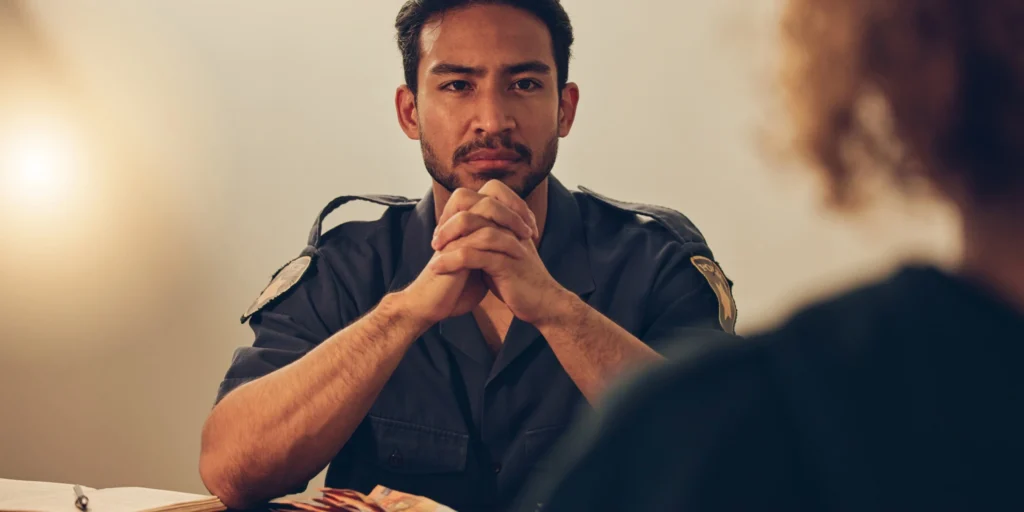
The primary goal of an interrogation is often perceived as obtaining a confession. However, a more nuanced approach focuses on uncovering the truth, which may not always manifest as a direct admission of guilt. This shift in perspective emphasizes the importance of viewing interrogations as a process of information gathering, rather than solely a means to secure a confession.
False confessions, while statistically infrequent, represent a critical concern within the criminal justice system. Defense attorneys will often hold suppression hearings attempting to have confessions suppressed by attempting to convince judges of coercive tactics. In a minor number of cases, the coercion is legitimate. However, the suggestion of coercive tactics is rampant. Riding a line between coercion and non-coercion can lead to unfavorable case law. This document explores the underlying causes and contributing factors that can lead to false confessions, while outlining best practices for investigators to minimize their occurrence.
At the outset of an interview, an interviewer may have developed certain conclusions regarding the events in question, potential witnesses, and who might bear responsibility, all derived from prior investigative findings. This can lead an investigator down the wrong path. Go down the wrong path without correction and the investigator may not be able to solve the case, at best. At worst, they arrest and charge the wrong person!
Mark Severino, a former Los Angeles Police Department officer, is often credited with pioneering a novel interviewing strategy some years ago that shifted the traditional focus from securing confessions to identifying falsehoods within a suspect’s narrative. This science-driven approach aimed to systematically differentiate between genuine and fabricated statements, offering a more nuanced and potentially more effective tool for investigations and prosecutions. This method has been gaining steam over the years. Offering another interviewing method outside of the popular techniques that have recently been heavily challenged in court.
Have you heard of trauma informed interviewing? It’s a new approach to interviewing that’s gaining popularity in law enforcement agencies across the country. The idea behind it is that individuals who have experienced trauma may have difficulty communicating about their experiences, and traditional interview techniques may not be effective in obtaining accurate information from them.
Crisis negotiation is a process of communication between law enforcement and an armed, barricaded, or otherwise dangerous subject, in order to effect a peaceful resolution.
The use of silence during interrogations can be an effective way to encourage people to provide more information. It can create a feeling of discomfort that may prompt the person to talk in order to relieve the tension.
We’ll be discussing the latest research on tonic immobility, trauma and the brain. This research has implications for how we interview victims of assault and violence, as well as how police and prosecutors handle these cases in court.
Deception cues can be divided into two main categories: non-verbal and verbal. Non-verbal cues include body language, such as eye contact, facial expressions, physical movements or lack thereof, and body posture. Verbal cues include changes in vocal cadence, pitch, sentence fluency, word choice, and sentence structure.
Just a quick signup below get’s you our FREE multipage guide to the 10 Deadly Sins of Suspect Interviews AND a 10% OFF discount code for your first class.
Newsletter and a discount
Get free bi-weekly law enforcement training articles and a discount on your next session. Plus, snag a free guide: “Top 10 Deadly Mistakes of Suspect Interviews.”